For homeowners, renters & individual homes
Understand recurring condensation in your home.
Understand the conditions behind condensation and mould risk: cold rooms, excess moisture and outdoor weather. Get practical guidance shaped by mould expertise.
£399Total · 14 days
Discuss your assessment with EnvIQUK-wide assessments. Share your postcode so we can confirm availability and agree kit handover and collection.
Online checkout and the self-service home platform are still being prepared.
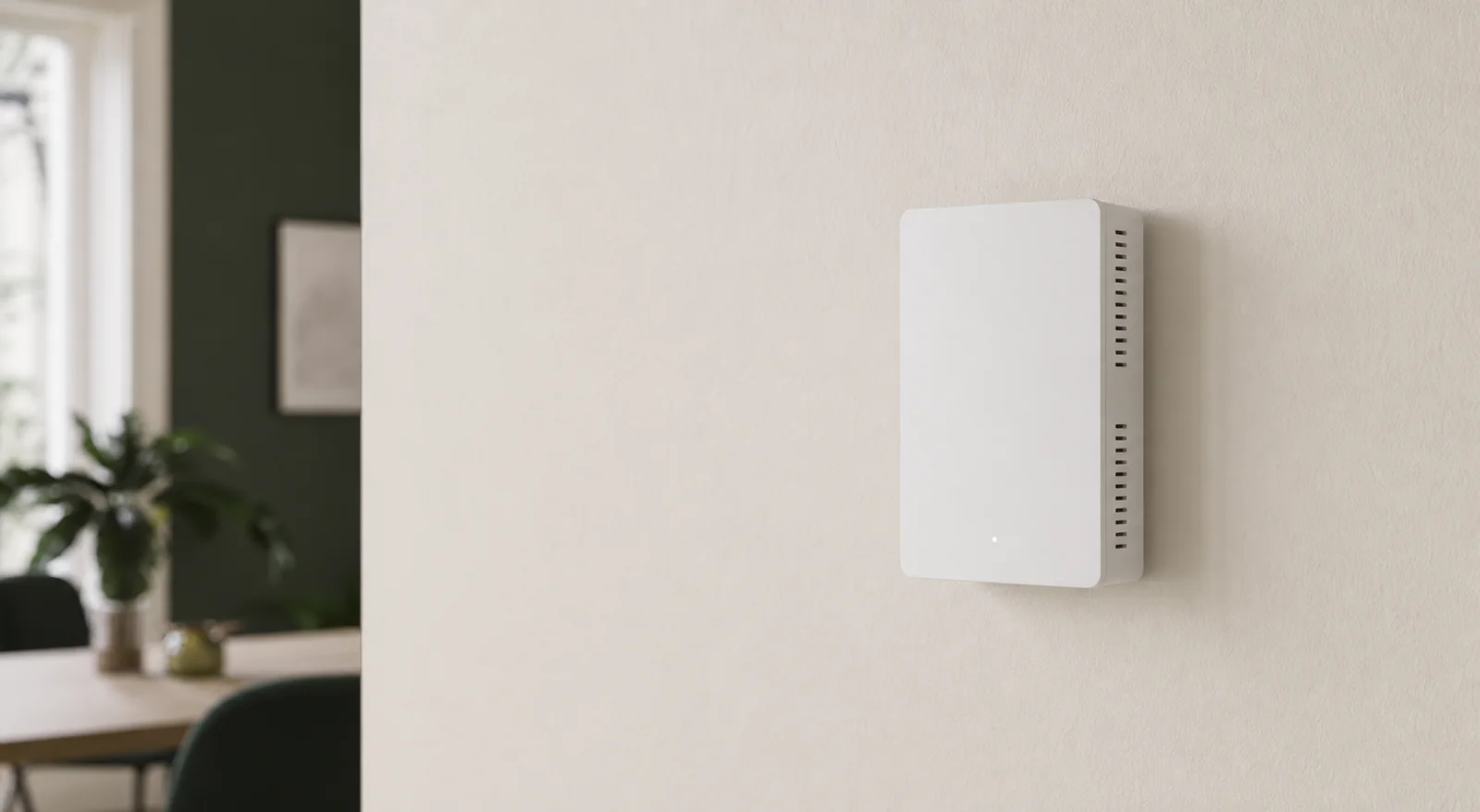
Two rooms. Outdoor context. Your next steps.Illustrative scene · Equipment and scope agreed individually
What you receive
Understand what is happening in your home.
Discuss two-room monitoring, outdoor context and practical advice for your home.
- Two monitored indoor rooms
- An outdoor comparison
- Condition-based practical guidance
- Reporting agreed before monitoring
Handover, collection, payment and reporting are agreed directly before monitoring begins.
01Main roomIndoor sensor
02Second roomIndoor sensor
03OutsideOutdoor sensor
GatewayConnects the readings to EnvIQ
Conceptual placement diagram. Follow the supplied instructions for the equipment and property.
Mould expertise first. Technology with purpose.
Developed by mould specialists at Mersey Mould.
EnvIQ starts with the property problem—not just the sensor. Our mould expertise shapes the questions we ask, the evidence we present and the practical guidance people receive.
How it works
A clear journey, from kit to insight.
Arrange kit handover and sensor placement
Monitor and record your observations
Review findings and arrange collection
Condensation monitoring
Understand the room. Not just the humidity.
A cool room and a warm room can have very different moisture conditions at the same relative humidity. Temperature, dew point and outdoor comparison help explain the practical options.
- Indoor and outdoor temperature and humidity
- Context for heating, extraction and ventilation
- Patterns over time, with missing evidence identified
EnvIQ / Your homeIllustrative · Not customer data
Understand your rooms
Your conditions, explained.
Bedroom · illustrative daily view
16.5°CTemperature
72%Humidity
820 ppmCO₂
11.4°CCalculated dew point
Example with a compatible CO₂ sensor; equipment varies by service. Dew point is calculated from room air, not a measured surface temperature.
Outdoor context
12°C · 65% humidity
- Indoor moisture
- 1.35 kPa
- Outdoor moisture
- 0.91 kPa
Choose a useful drying action
In this example, outdoor air holds less moisture. A short air change can help remove moisture when safe, alongside steady warmth and extraction.
Readings → context → practical next steps
Illustrative advice · Not customer data
This room is cold and humid
Set heating to 18°C and keep steady warmth overnight. Use working extractor fans to remove moisture at source.
Progress noticedSustained improvement can be acknowledged when comparable readings support it—not proof of what someone did.
Practical next steps
Advice with a reason behind it.
The planned home service combines condition-based guidance with your observations. It is designed to explain what to try and help you understand measured changes.
Remaining warnings stay visible. Persistent condensation or visible mould may require inspection, not just different habits.
Updates that keep context
Know where to look next.
Planned account, connection and completion emails are part of the service being prepared. Availability will be confirmed before an assessment; this page does not activate notifications.
No SMS, mobile push or guaranteed real-time delivery is implied. Readings depend on equipment connectivity and reporting intervals.
EnvIQ · Example in-platform update
A clearer next step for your room
See the latest available conditions and the guidance that goes with them.
Updates matched to the service and available evidence
Delivery channels vary. This is not an SMS or push-notification promise.EnvIQILLUSTRATIVE REPORT
HOME CONDENSATION ASSESSMENTFrom readings.
From readings.
To understanding.
Room evidence · Findings · Next steps
What we observed
Patterns across the monitored period, with gaps and limitations visible.
What happens next
Practical recommendations linked to the available evidence.
Your report
The story of your property, backed by evidence.
The planned end-of-assessment report brings together your two monitored rooms, outdoor context and observations, with recommendations relevant to condensation.
- Monitoring period, locations and data coverage
- Charts, findings and important limitations
- Practical recommendations tied to evidence
Thermal interpretation requires suitable cold-weather conditions and sufficient evidence. EPC data, where available, provides background—not a new energy certificate.
Useful to know
Your questions, answered.
Is the home assessment available to book online?
Contact EnvIQ to discuss the £399 total, 14-day assessment and confirm availability. Handover, collection, payment and reporting are agreed directly. Online booking and payment are not available; an enquiry does not reserve a kit or start monitoring.
What is in the monitoring kit?
One gateway, two indoor sensors and one outdoor sensor. Placement instructions explain which rooms to choose and how to position equipment. Handover and collection are agreed directly before proceeding.
How is monitoring different from a damp and mould survey?
Monitoring records room conditions over time, adding evidence between property visits. A damp and mould survey investigates the property and possible causes. Monitoring complements that work; it is not a property inspection or a diagnosis of damp or mould.
Is a condensation monitor a mould sensor?
No. Temperature and humidity sensors show conditions associated with condensation and mould risk; they do not directly detect mould or mould spores. Monitoring cannot confirm the cause of damp or rule out a building defect. Visible mould and persistent damp still need appropriate investigation.
What should I include in a home assessment enquiry?
Share the property postcode, the rooms affected, when condensation appears and any visible damp or mould. We can discuss whether monitoring is useful alongside an inspection and confirm availability, handover, collection, payment and reporting before you decide. Report urgent repair or safety concerns through the appropriate channel without waiting for monitoring.
Where are home assessments available?
Home assessments are available across the UK. Tell us the property postcode so we can confirm availability and agree kit handover and collection directly before proceeding.
What happens after 14 days?
Monitoring ends after the agreed assessment period and the equipment is collected as arranged. Reporting is confirmed before monitoring begins. The planned self-service platform will retain completed reports and saved advice without a fixed access expiry; it is still being prepared.
Will it tell me how well my home holds heat?
Thermal interpretation is only meaningful with suitable cold-weather conditions and enough reliable evidence. A short assessment is not an insulation survey or a replacement EPC. Available EPC information adds background context rather than live measurements.
Monitoring supports informed decisions. It does not diagnose every building defect, measure every pollutant or certify legal compliance. Read about data security.
The knowledge centre
Good decisions start with understanding.
Condensation
Why condensation can hide behind furniture.
Room readings can miss cold surfaces. Learn what to check and when further investigation matters.
Read the guideYour assessment
What a two-week assessment can show.
Understand the room patterns, diary observations and evidence limits behind a useful assessment.
Read the guideMorning condensation
Recurring morning condensation: what to record.
Keep a useful record of room conditions and observations, without treating a pattern as a diagnosis.
Read the guide