01Why ongoing monitoring adds useful evidence
A visit and visible inspection remain important, but they capture conditions at particular moments. Regular room readings add time, room and outdoor context between visits, while resident observations and visible mould remain part of the evidence.
- Compare temporary peaks with persistent patterns
- See whether one monitored room behaves differently
- Retain evidence before and after practical or maintenance action
02What EnvIQ monitors and derives
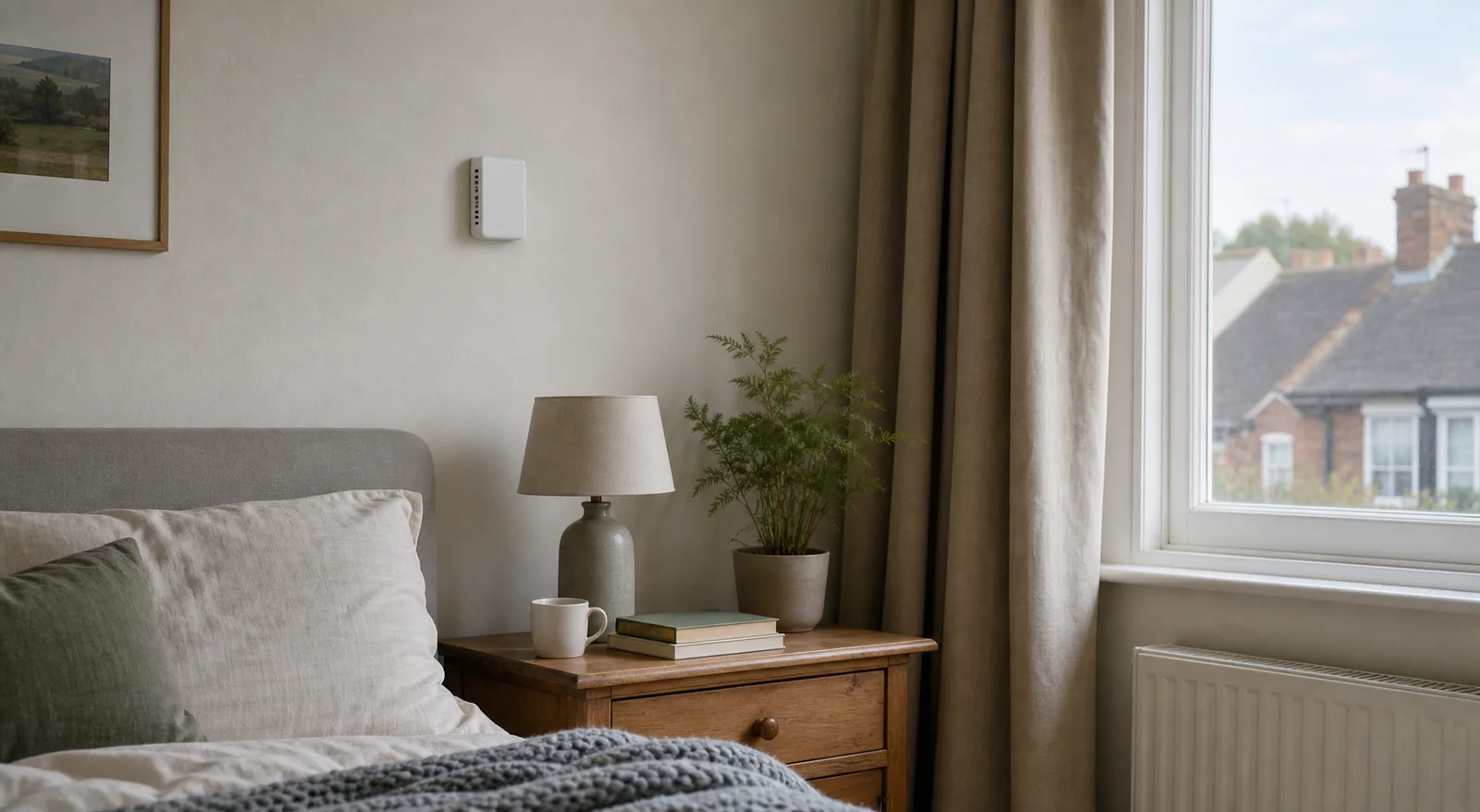
Configured sensors record indoor temperature and relative humidity, with CO₂ available where supported. Outdoor temperature and humidity add context. EnvIQ can derive dew point and vapour pressure, then present trends with sensor placement, freshness and evidence confidence rather than treating one reading as the answer.
- Indoor and outdoor temperature and relative humidity
- Dew point and condensation-risk context
- Vapour-pressure comparison and supported CO₂ trends
03How indoor and outdoor comparison supports context
Relative humidity changes with temperature, so indoor and outdoor percentages are not directly comparable on their own. Comparing vapour pressure can indicate whether a short period of ventilation may support drying. Outdoor conditions provide context; they do not independently create an indoor warning or guarantee that a room will dry. Guidance must also consider extraction, safe window use and the risk of overcooling.
04From an indicator to a proportionate next step
Residents receive current, non-blaming guidance from the available evidence. A resident can report condensation and identify the affected room. Where suitable, an optional condition-relevant 7-day support plan can add a practical daily step, an explanation and a simple check-in. It can also record barriers such as a heating problem or extractor concern that may need property-team review.
05What housing teams can retain and review
Housing teams can follow property priorities, room evidence, resident reports, optional plan progress, check-ins, maintenance barriers and subsequent readings in one role-controlled record. This supports a clearer handover, proportionate investigation and before-and-after review without presenting a monitored pattern as proof of its cause.
06What monitoring cannot establish
Environmental monitoring cannot confirm a hidden leak, structural or fabric defect, ventilation failure, the cause of a resident’s symptoms or legal compliance. Visible mould, leaks, heating failures and urgent health or safety concerns still need prompt action and an appropriate inspection; monitoring should support that response, not delay it.