A short monitoring period is most useful when it starts with a specific question: does one bedroom stay cooler overnight, when does moisture rise, or how do two rooms differ? A two-week record can make those patterns easier to discuss. It describes the places and dates actually monitored, not every room or every season. Before interpreting a chart, check the assessment dates, the room labels and whether the sensors stayed in the same positions throughout.
Temperature and relative humidity need to be read together. The Met Office explains that relative humidity describes how close air is to saturation at its current temperature. A percentage can therefore change as the air warms or cools, even without a corresponding change in its moisture content. A higher percentage outdoors is not, by itself, evidence that outdoor air contains more moisture than indoor air. Comparing the percentages alone can lead to the wrong interpretation.
Vapour pressure gives another view of airborne moisture: it is the pressure contributed by water vapour, commonly expressed in hectopascals. Calculated from temperature and relative humidity, it can support an indoor–outdoor moisture comparison. That comparison still needs readings from comparable times and appropriate sensor positions. Missing, old or poorly placed outdoor readings leave a gap in the context; they should not be replaced with an assumption that opening a window would help. Outdoor conditions alone do not establish an indoor problem.
Dew point is the temperature at which air becomes saturated as it cools. It helps explain why condensation can occur on a colder surface. But a room sensor measuring air temperature and humidity has not measured the temperature of the window, wall or corner where water appears. A calculated dew point is therefore not confirmation of condensation at that location, nor an assessment of the wall's construction. Surface observations and, where needed, appropriate measurements or an inspection remain separate evidence.
Read the timeline before relying on a summary. Ask how much of each room's monitoring window has usable readings, whether there are long gaps and whether the two rooms and outdoor sensor overlap in time. A room average can conceal a brief rise or an overnight pattern; a maximum without a timestamp can be equally unhelpful. Missing periods should remain visible, rather than appearing as normal conditions. Two monitored rooms also leave the rest of the home unmeasured.
A simple household diary adds context without becoming a sensor measurement. Notes about cooking, showering, heating use, an open window or visible condensation can help explain what to investigate alongside a chart. Government ventilation guidance describes everyday activities such as cooking and bathing as sources of moisture. A diary entry near a change in readings is still an association, not confirmation of its cause. It should never be used to assign blame to the person living in the home.
A useful assessment separates what was observed, what was calculated, what the patterns may suggest and what remains unknown. It should say which rooms and dates support each conclusion and identify missing context. Air readings alone cannot identify a leak, determine insulation performance or establish the cause of a building defect. Questions outside the monitored evidence need their own investigation. The best next step may be a clearer question or additional evidence, rather than a confident-sounding answer.
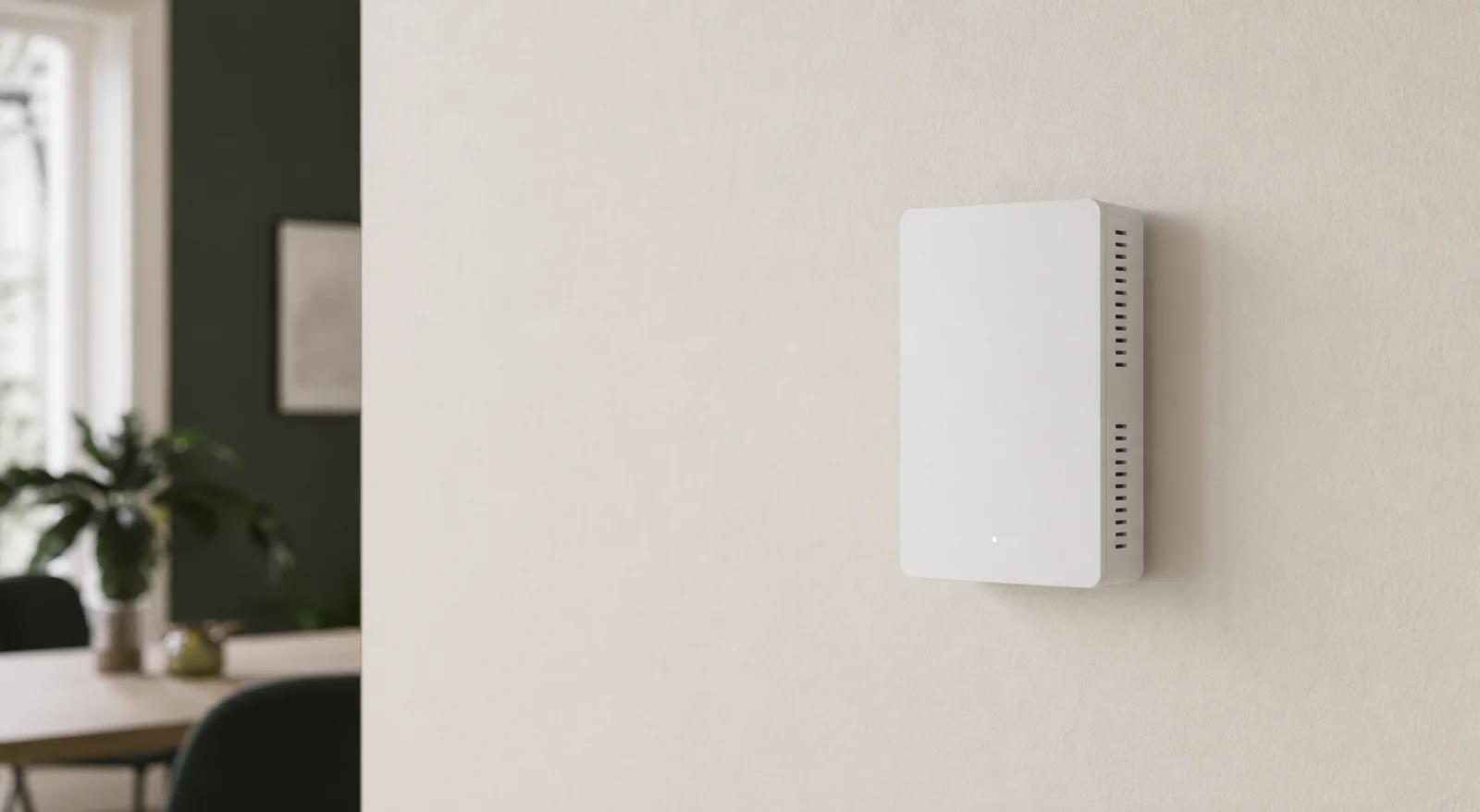
EnvIQ is preparing a 14-day home condensation assessment service using two indoor sensors, one outdoor sensor and a gateway. Online booking and payment are not available yet. The public service page explains the proposed package and provides an enquiry route. This guide describes how to interpret monitoring evidence; it is not a sample customer result or a promise that a completed assessment or report is available to order today.
Sources and further reading
- Met Office: understanding humidity and dew point
- Met Office HadISDH: definitions of humidity variables
- GOV.UK: existing home ventilation guide