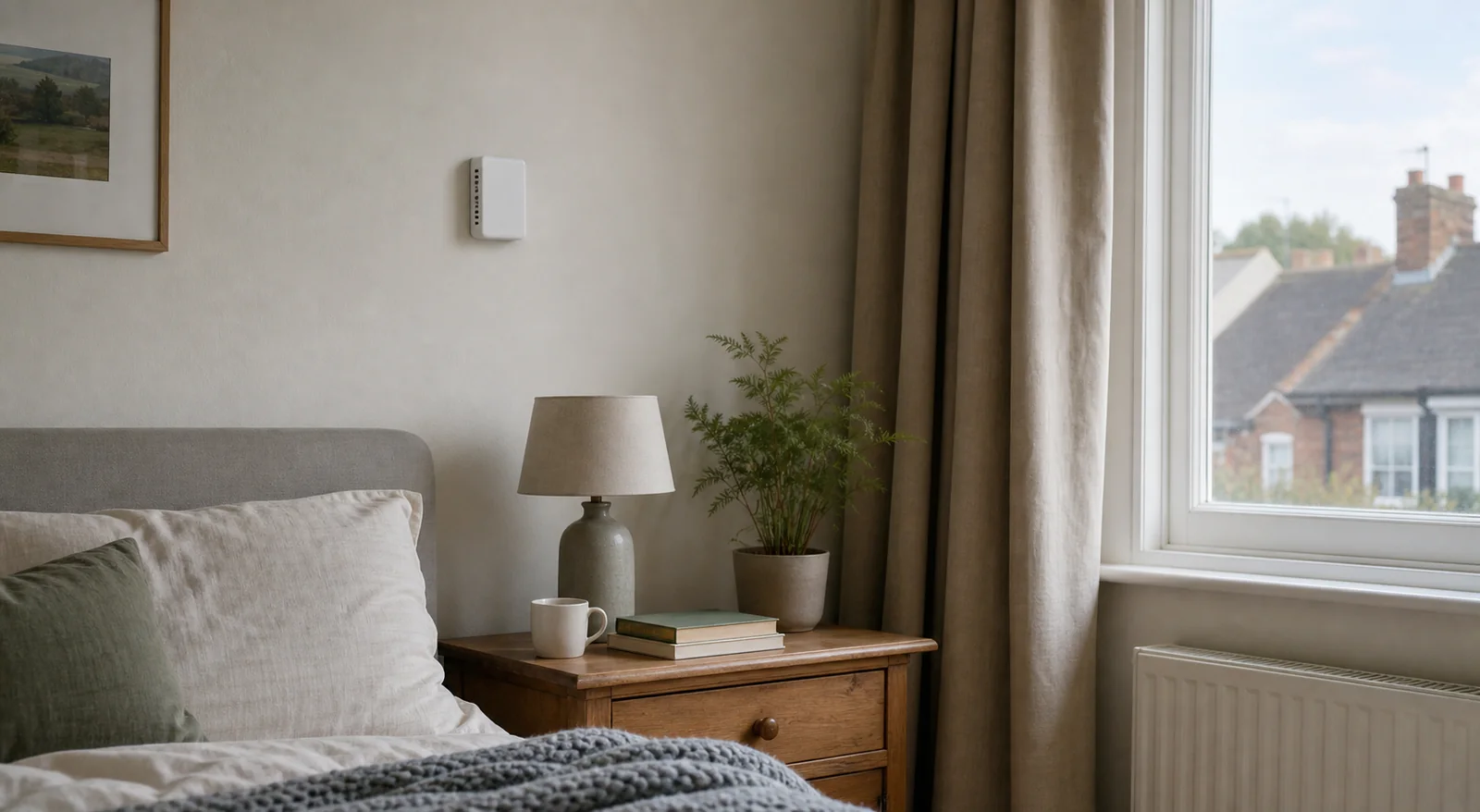
A room can feel comfortable while a window, external corner or patch behind a wardrobe remains much colder. That difference helps explain why condensation is sometimes concentrated in one place rather than spread evenly around the home. Finding a damp patch behind furniture does not, however, establish condensation as its cause: leaks and other building defects may need investigating too. The useful starting question is not ‘who caused this?’ but ‘what is happening at this location, and what evidence would help us understand it?’
Start with the surface, not just the thermostat. Condensation can form when a surface is cold enough for the water vapour in nearby air to turn into liquid. The relevant temperature is called the dew point. A room-air reading and a wall-surface reading are different measurements: a sensor on a shelf cannot tell you the temperature of the wall behind a wardrobe. A professional assessment may therefore need surface measurements and an inspection alongside room monitoring. One apparently reassuring number should not override a visible problem.
Think about the space around furniture. Where practical, leave room for air to circulate around furniture positioned against external walls, rather than packing belongings tightly against them. Keep existing ventilation openings unobstructed. These are practical checks, not proof that furniture placement caused the problem or a substitute for investigating a persistently cold or wet wall. If moving an item would be difficult or unsafe, ask for help rather than struggling with it. Photograph the affected location before changes where possible, so the original pattern is not lost.
Address moisture and warmth together. Everyday activities introduce moisture indoors; effective extraction helps remove it at source. Use the installed kitchen and bathroom ventilation as intended, keep it clean and follow its operating instructions. Heating and moisture removal have different jobs. Warming air can lower its relative-humidity percentage without removing the water vapour already present. For that reason, a falling humidity percentage after heating is not, by itself, evidence that the room has dried out. Avoid treating either a thermostat setting or a single humidity target as a guaranteed solution for every cold surface.
Make the next assessment specific. A useful enquiry describes the exact location, when the patch was first noticed, whether it returns, and any changes to heating, ventilation or the building. Ask what has been checked, what remains uncertain and what happens next. For example, a report should distinguish ‘room humidity increased overnight’ from ‘this wall was measured below the calculated dew point’. Those statements are not interchangeable. Keep any suspected leak or visible mould in the report even if the room readings look better later; monitoring should support the response, not postpone it.
EnvIQ adds a record over time. Developed by mould specialists at Mersey Mould, EnvIQ brings available room temperature and humidity trends into a clearer account of property conditions. For a homeowner, that can help frame the questions to ask about a recurring concern. For a housing team, it can support follow-up alongside resident observations and property investigations. It does not directly detect mould or establish the cause of a damp patch. Explore our home condensation assessment information or housing-provider monitoring, or send an enquiry explaining the location you are concerned about. We can discuss which evidence would be useful before agreeing the next step.
Sources and further reading
- Met Office: Understanding humidity
- UK Government: Existing home ventilation guide (England)
- UK Government: Understanding and addressing damp and mould (England)