Emergency hazards
Investigate and complete relevant safety work as soon as reasonably practicable, both within 24 hours of awareness.
For housing teams & landlords
Respond to damp, mould and condensation concerns with room-level evidence, clear property priorities and a connected record of action. Developed by mould specialists at Mersey Mould.
What you receive
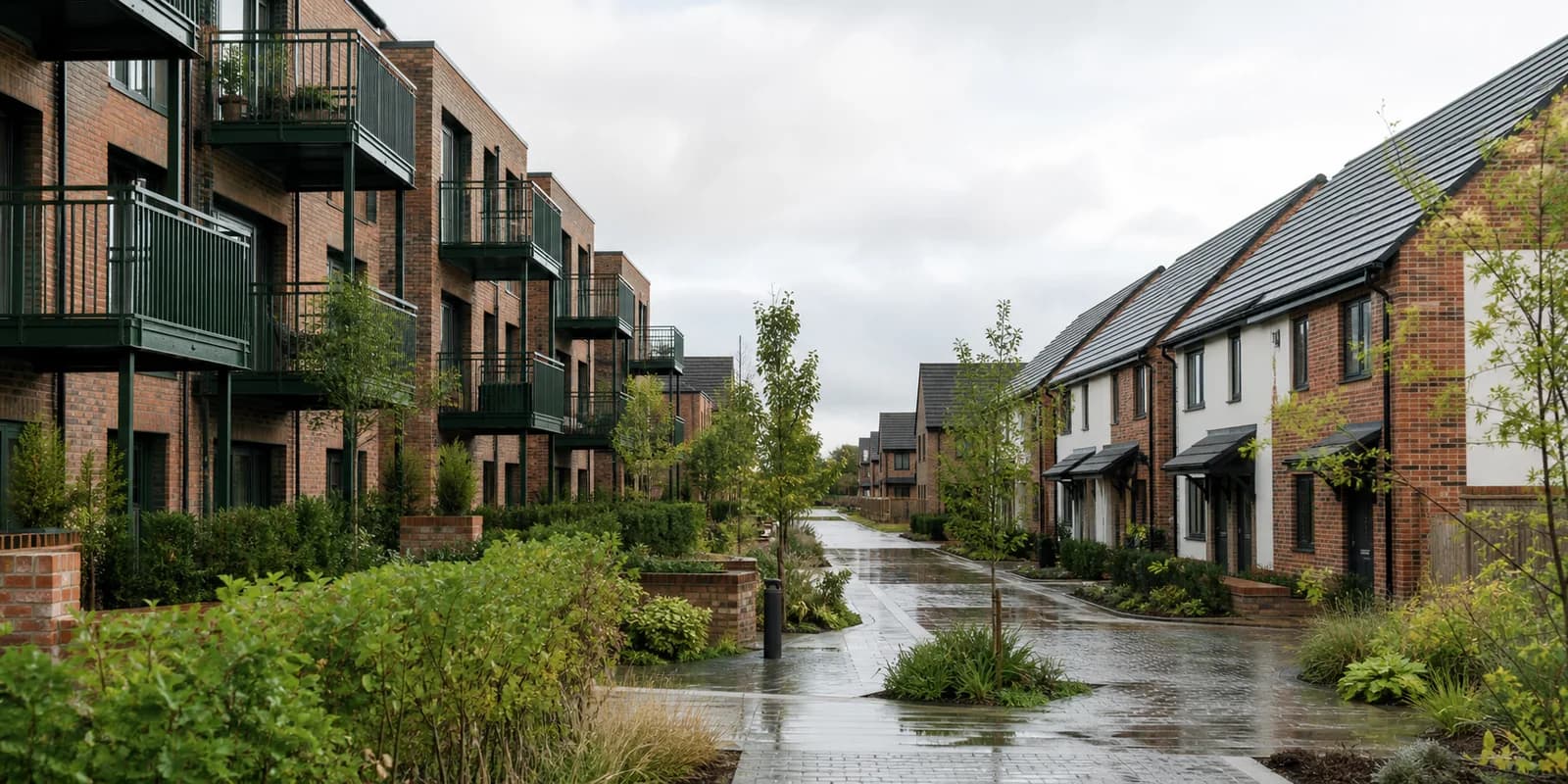
Environmental monitoring for housing providers brings room conditions, resident concerns and team follow-up into one property record.
Monitoring scope, sensor capability, room selection and reporting arrangements are agreed before the programme begins.
A clearer next step
Fictional portfolio summary. These links open public guidance, not property records.
Mould expertise first. Technology with purpose.
EnvIQ starts with the property problem—not just the sensor. Our mould expertise shapes the questions we ask, the evidence we present and the practical guidance people receive.
Awaab’s Law · England · Social housing
Since 27 October 2025, Awaab’s Law has set deadlines for significant damp and mould hazards and emergency hazards in England’s social housing.
Investigate and complete relevant safety work as soon as reasonably practicable, both within 24 hours of awareness.
Investigate a potential significant damp or mould hazard within 10 working days of awareness.
Complete relevant safety work within 5 working days of the investigation concluding that a significant hazard exists.
Normally provide the tenant’s written summary within 3 working days of the investigation concluding, subject to the guidance’s exceptions.
Suitable alternative accommodation is required if relevant safety work cannot be completed in time. Further preventative-work and communication duties also apply. This is a summary, not a complete legal checklist.
EnvIQ brings room trends, resident concerns, investigation records and follow-up together. Monitoring must never delay investigation or making a home safe, and does not establish legal compliance.
Legal information checked 2 October 2026. These timeframes are specific to England’s social rented sector; do not assume they apply to every private rental, homeowner or commercial premises.
Resident support · Clear communication · Accountable follow-up
Practical advice and a clear route to report a concern support your damp and mould response—and the evidence behind it.
Residents can check practical heating, extraction and ventilation guidance alongside available readings. Active condensation plans support daily guidance; enabled notifications draw attention to relevant updates.
Residents can raise a concern when mould, condensation or another property issue persists. Authorised teams can review the concern details shared with them and organise follow-up; private notes stay private.
Bring shared concerns, investigation activity, monitored conditions and outcomes into the property’s evidence story. This supports communication and oversight—not proof that a resident followed instructions.
Notifications depend on the enabled service, preferences and relevant evidence; a daily email is not guaranteed. Advice and issue reporting support a landlord’s compliance processes, but do not replace inspection, repairs, required tenant communications or statutory deadlines. Do not wait for sensor evidence or a resident to use the app before acting on a known hazard.
How it works
Condensation monitoring
A cool room and a warm room can have very different moisture conditions at the same relative humidity. Temperature, dew point and outdoor comparison help explain the practical options.
Understand your rooms
Bedroom · illustrative daily view
Example with a compatible CO₂ sensor; equipment varies by service. Dew point is calculated from room air, not a measured surface temperature.
12°C · 65% humidity
In this example, outdoor air holds less moisture. A short air change can help remove moisture when safe, alongside steady warmth and extraction.
Set heating to 18°C and keep steady warmth overnight. Use working extractor fans to remove moisture at source.
Practical next steps
The platform connects available evidence to practical guidance. Sustained measured improvement can be acknowledged without claiming that a person definitely followed instructions.
Remaining warnings stay visible. Persistent condensation or visible mould may require inspection, not just different habits.
Updates that keep context
Current in-platform updates keep guidance and relevant follow-up connected to the evidence. Confirm which email notifications are included for your agreed service.
No SMS, mobile push or guaranteed real-time delivery is implied. Readings depend on equipment connectivity and reporting intervals.
See the latest available conditions and the guidance that goes with them.
Updates matched to the service and available evidence
Delivery channels vary. This is not an SMS or push-notification promise.Room evidence · Findings · Next steps
Patterns across the monitored period, with gaps and limitations visible.
Practical recommendations linked to the available evidence.
Your report
A professional record explains what was measured, the patterns observed and what may warrant action or further investigation.
Useful to know
Authorised housing teams use role-based property access. Managers can organise responsibility and workers can see their assigned work; private resident and internal records retain their audience controls.
No. Room readings show environmental patterns, not a definitive diagnosis of a building defect. Visible mould, resident concerns and inspections remain important alongside the measurements.
Monitoring adds room-level evidence between property visits, helping your team review recurring conditions and measured changes. It complements an inspection; it does not diagnose a building defect or replace investigation of resident concerns, visible damp or mould.
Yes. Discuss a defined pilot, the rooms and questions to monitor, and how your team will review the evidence before extending the programme.
Monitoring supports informed decisions. It does not diagnose every building defect, measure every pollutant or certify legal compliance. Read about data security.
The knowledge centre
Condensation
Room readings can miss cold surfaces. Learn what to check and when further investigation matters.
Read the guideHousing evidence
Review recurring room patterns, evidence confidence and proportionate follow-up.
Read the guideProperty evidence
How room patterns and professional observations work together.
Read the guide