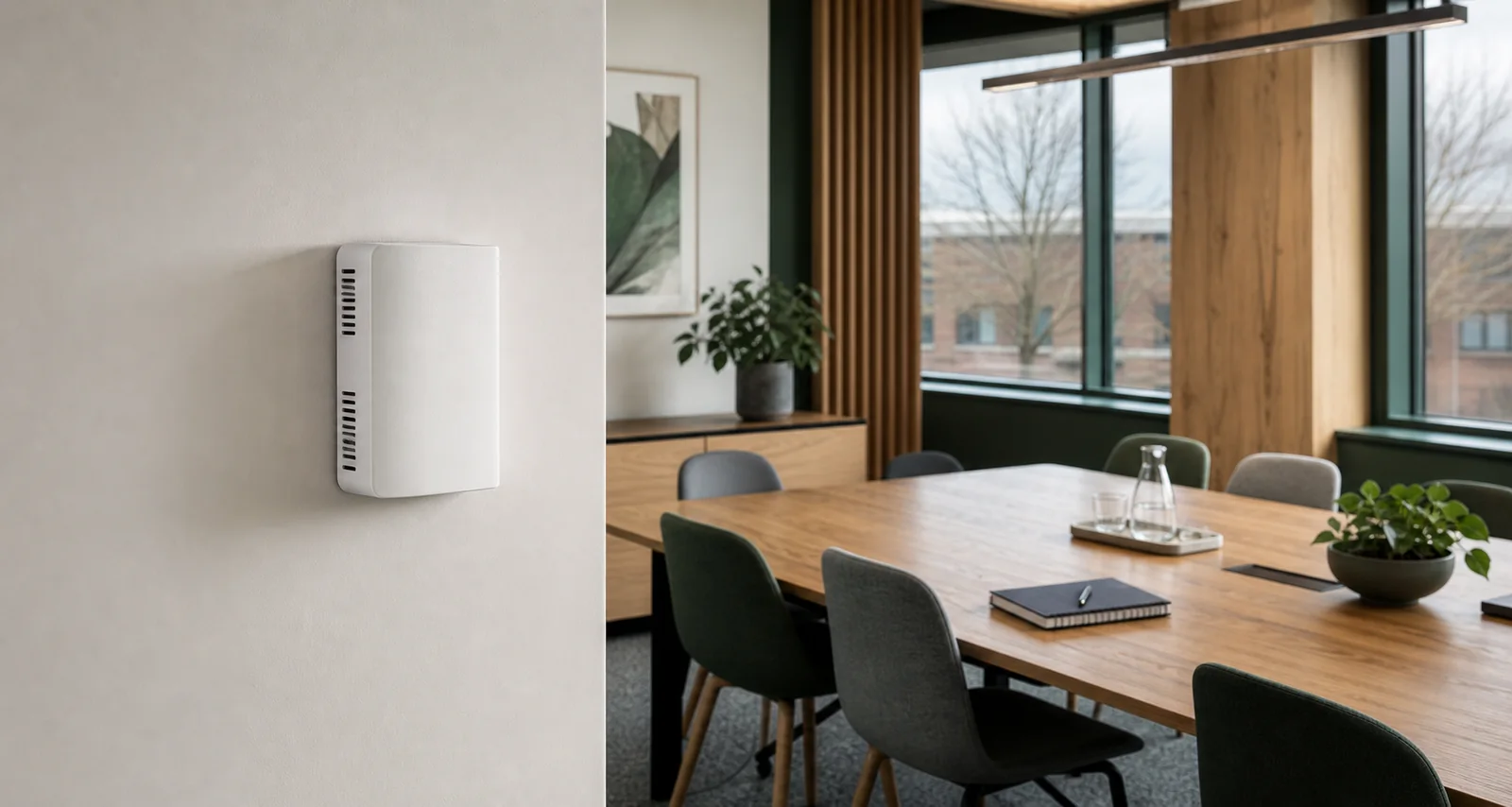
CO₂ released by occupants can build up more quickly in a small or heavily used room than in a larger space. Meeting schedules, closed doors, occupancy density and the length of time between uses can all influence the pattern recorded during the working day.
Ventilation is not always distributed evenly. One room may have different opening windows, mechanical supply or extract performance, door position or airflow pathways. Comparing rise and recovery across representative occupied periods can be more informative than comparing two isolated readings.
Sensor position and room context also matter. A monitor placed too close to a person, doorway, window or supply vent may not represent the wider occupied zone. A useful assessment records placement and considers room use alongside the measured trend.
CO₂ monitoring provides an indicator of ventilation conditions in occupied spaces; it does not measure every indoor pollutant, determine the cause of a pattern or certify legal compliance. Persistent or unexpected differences may justify ventilation checks or further specialist assessment.