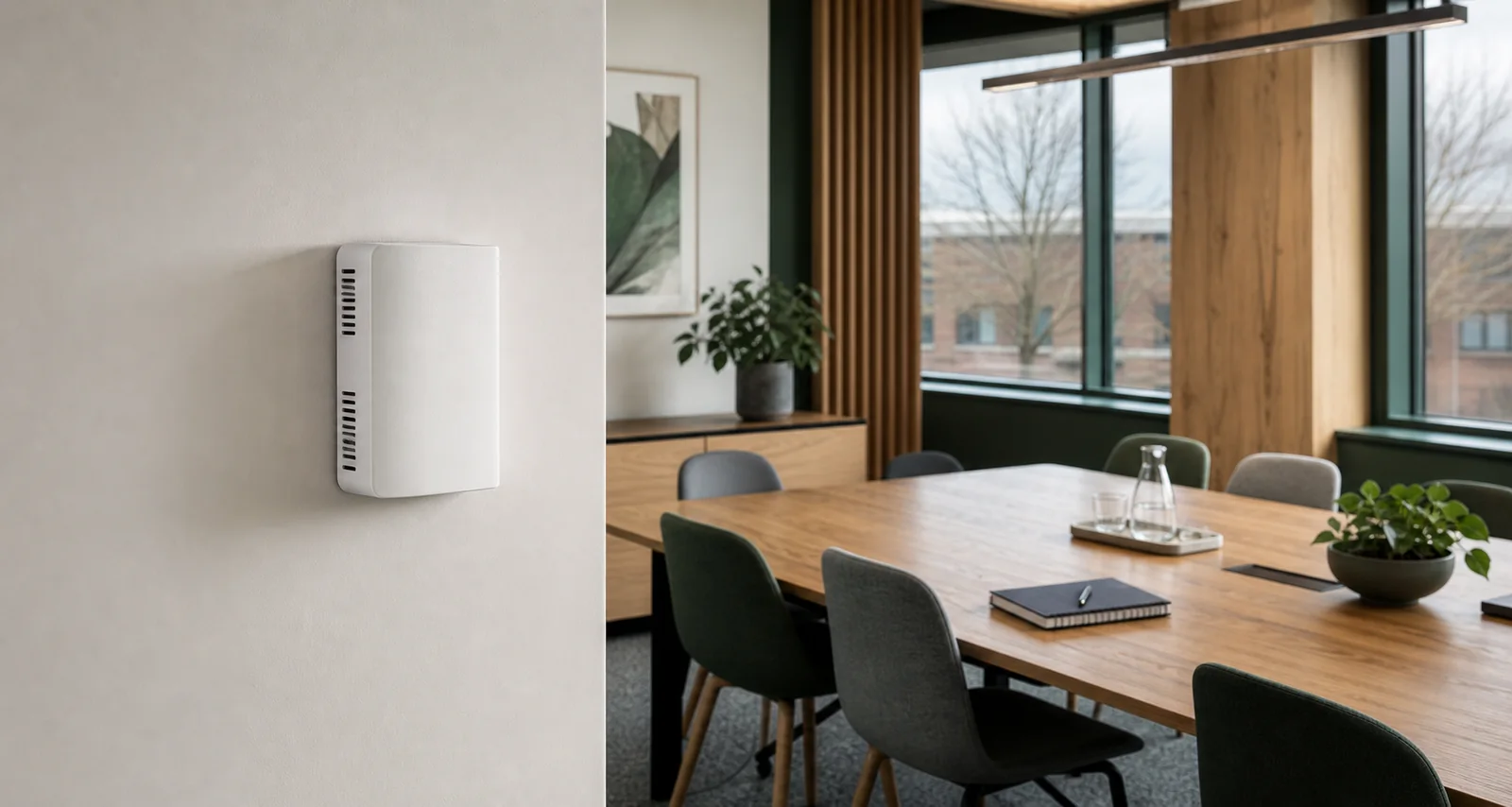
A one-off reading captures only one moment. An agreed monitoring period can show how workplace rooms behave through representative occupied and unoccupied periods, including when conditions rise, recover or differ between spaces.
CO₂ trends can provide ventilation context, while temperature and humidity help explain comfort and moisture conditions. Outdoor comparison adds useful context when interpreting whether indoor patterns reflect weather, occupancy or a question that warrants further review.
The monitoring scope, room use, occupancy observations and sensor placement all affect what can be concluded. A full report should distinguish measured findings from interpretation, make limitations visible and provide practical guidance and proportionate recommendations.
Temporary environmental monitoring does not measure every indoor pollutant, certify regulatory compliance or diagnose the cause of a pattern. Further inspection or specialist assessment may still be appropriate.